good morning, codyhosterman I used the PureStorage.Pure1
good morning, codyhosterman I used the PureStorage.Pure1 module to get load metrics from Pure1, which worked fine yesterday. But when I run the same script with same cert, etc, I get the message JWT expired. How can I make this authentication process work so if I run it once every hour, I can get authenticated properly? ```$mypwd = "xxxx" $CertObj = Get-PfxCertificate -FilePath C:\Stash\PowerShell-Projects\Pure1\mypfx.pfx -Password $mypwd $pure1_appid = "pure1OSWa2R7FOwejvETD" $PureOneConn = New-PureOneRestConnection -certificate $CertObj -pureAppID $pure1_appid``` reply: `Exception: The Pure1 Organization with ID 1001 is already connected.` ```$PureOneArrays = Get-PureOneArray -arrayProduct FlashArray Invoke-RestMethod: {"message":"JWT is expired"}```1.9KViews0likes11CommentsGetting Started with Pure Storage Fusion: A Quick Guide to Unified Fleet Management
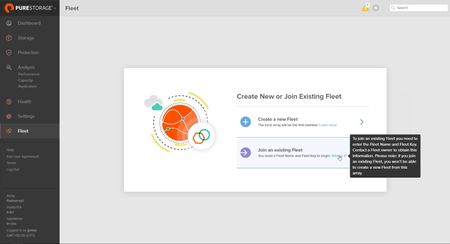
One of the most powerful updates in the Pure Storage ecosystem is the ability to federate arrays into a unified fleet with Fusion. Whether you're scaling out infrastructure or simplifying operations across data centers, Fusion makes multi-array management seamless—and the setup process is refreshingly simple. Here’s a quick walkthrough to get your fleet up and running: 🔹 Step 1: Create or Join a Fleet From the Fleet Management tab in the Purity UI, you can either create a new fleet or join an existing one. Creating a fleet? Just assign a memorable name and generate a one-time fleet key. This key acts like a secure handshake, ensuring that only authorized arrays can join. 🔹 Step 2: Add Arrays to the Fleet On each array you want to bring into the fold: Select Join Fleet, enter the fleet name, and paste in the fleet key. Once verified, the array becomes part of your managed fleet. 🔹 Step 3: Manage as One With federation complete, you now have a single, unified control plane. Any array in the fleet can serve as your management entry point—configure, monitor, and operate across the entire environment from one location. This capability is a big leap forward for simplifying scale and operations—especially for hybrid cloud or multi-site environments. If you're testing it out, I’d love to hear how it's working for you or what use cases you're solving.1.3KViews6likes2CommentsAsk us everything about Purity Upgrades!
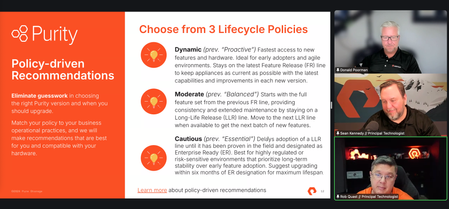
💬 Have more questions for our experts around Purity Upgrades after today's live "Ask Us Everything"? Feel free to drop them below and our experts will answer! dpoorman , skennedy , rquast , jhoughes tag your it! You can also check out these upgrade resources: Bulk self-service upgrades demo video Upgrade your own FlashArray with Pure1 blog Fleet-wide self-service upgrades brief600Views3likes3CommentsAnnouncing the General Availability of Purity//FA 6.8.6
We are happy to announce the general availability of 6.8.6, the seventh release in the 6.8 Feature Release line, including the SMB Continuous Availability feature, which guarantees zero downtime for customers' businesses during controller disruptions and upgrades, ensuring uninterrupted access to shared files. Some of the improvements to Purity contained in this release include: SMB Continuous Availability preserves file handles to ensure uninterrupted SMB access during controller failovers and upgrades. Target Pods for Pgroup Replication allows customers to target a specific pod for protection groups, avoiding the clutter of snapshots replicating to an array’s root pod. CBS for AWS Write Optimization for Amazon S3 improves how its data is committed and managed on Amazon S3 and can significantly drop the AWS infrastructure operating cost, providing customers with write or replication heavy workloads with cost reductions of up to 50%. Allow NVMe Read-Only Volumes for ActiveDR eliminates restriction on promotion/demotion of pods containing NVMe-connected volumes, saving customers from unexpected command failures and time-consuming workarounds. For more detailed information about features, bug fixes, and security updates included in each release, see the release notes. UPGRADE RECOMMENDATIONS AND EOL SCHEDULE We recommend customers with compatible hardware who are looking for the fastest access to the latest features upgrade to this new feature release. When possible, customers should make use of Self-Service Upgrades (SSU) to ease the process of planning and executing non-disruptive Purity upgrades for their fleet. This 6.8 release line is planned for feature development through May 2025 with additional fixes coming in June 2025 to end the release line. HARDWARE SUPPORT This release is supported on the following FlashArray Platforms: Cloud Block Store for Azure and AWS, FA//X (R3, R4), FA//C (R3, R4), FA//XL, FA//E, and FA//RC (starting with 6.8.5). Note, DFS firmware version 2.2.3 is recommended with this release. ACKNOWLEDGEMENTS We would like to thank everyone within the engineering, support, technical program management, product management, product marketing, finance and technical product specialist teams who contributed to this release. LINKS AND REFERENCES Purity//FA 6.8 Release Notes Self-Service Upgrades Purity//FA Release and End-of-Life Schedule FlashArray Hardware and End-of-Support DirectFlash Shelf Software Compatibility Matrix FlashArray Capacity and Feature Limits600Views1like0Comments
4 steps to enable Pure Fusion
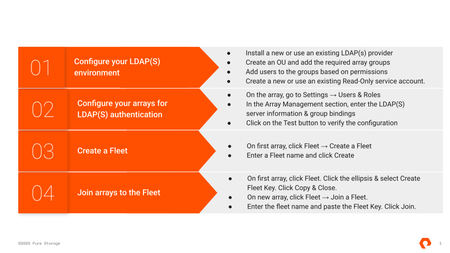
Several teams like yours have recently switched on Pure Fusion and saved 39.5 hours of staff time per day by boosting application-response times. It’s been a game changer for enterprise data management. Read more on how Mississippi Department of Revenue deployed Pure Storage® platform for a faster, more versatile storage to boost application performance, protect data, and support hypervisor mobility. Pure Fusion unifies enterprise data and automates workflows with simplified storage management, workload automation and AI-driven workload placement. With the power of an Intelligent Control Plane, Fusion automates storage management across cloud, edge or core or any protocol file, object or block. Anchoring the Enterprise Data Cloud, it unifies data services and integrates with existing infrastructures, turning complex, manual tasks into streamlined, policy-driven operations. Fusion enables end-to-end automation—freeing you to accelerate innovation while reducing operational risk and overhead. Here are the 4 steps to enable Pure Fusion: Click here for the complete Pure Fusion Quick Start Guide. Using Secure LDAP (LDAPS) requires additional configuration with certificates. Please reference the Quick Start guide for more information. For compatibility reference, please see the Compatibility Matrix.500Views1like1CommentFREE BEER FOR ALL!!! Now That I Have Your Attention, Let's Talk About Purity Updates.
WAIT WAIT WAIT - don't leave yet because of my free beer tomfoolery....hear me out. Listen, we get it. Storage OS updates are historically the LAST thing you ever want to consider for your already impossibly thin maintenance windows. And, we all know NOBODY ever grew up saying, "When I get older, I want to manage enterprise storage for its rock and roll lifestyle." 😀 But - hear me out. Any past pain, suffering, or heavy drinking you may have taken on during previous OS updates with other legacy vendors has been minimized or even flat out eliminated by how we handle updating Purity for FlashArray and FlashBlade. We offer two tracks you can leverage for making them happen by either working directly with support for a white glove update experience where they do all the work remotely, or you can complete them via the Self Support Update (SSU) feature built into Pure1. We encourage regular Purity updates for two reasons: Performance. stability and security improvements...obviously New feature adoption. Want Fusion 2.0? Want the ability to deliver NFS/SMB shares on your FlashArray? These are bundled into your Purity updates and require no additional licensing costs to adopt if you want them. Think of them as over the air feature updates that are all the rage for EVs... For now, take a quick look at the Purity version you are running. If you haven't updated it in a year or two (which many of you probably haven't), you're missing out on being able to squeeze extra value out of your storage. I will be posting some supporting demos and other materials to help you visualize the process in the coming month or so. I would LOVE any feedback from the community, good or bad, on current or past experiences with our updating experience...through it all we can get more boats to rise with the tide! Stay tuned! DP419Views6likes1Comment
Feature Request: Certificate Automation with ACME
Hi Pure people, How about reducing my workload a little by supporting the ACME protocol for certificate renewal? . Certficate lifespans are just getting shorter, and while I have a horrid expect script to renew certificates via ssh to flasharray, it would be much simpler if Purity ran an ACME client itself. PS We use the DNS Challenge method to avoid having to run webservices where they aren't needed.399Views1like2CommentsAsk Us Everything Recap: Rethinking Storage with the Intelligent Control Plane
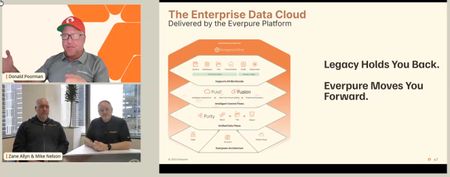
The latest Ask Us Everything session focused on a topic that’s quickly becoming central to Everpure’s strategy: the intelligent control plane. And based on the questions from the community, it’s clear that many teams are starting to think beyond individual arrays and toward managing storage as a unified platform. Here are the key takeaways—driven by the questions attendees asked and the answers from Everpure experts Don Poorman, Zane Allyn and Mike Nelson. “Do I need to rebuild my automation to use Everpure Fusion?” Most teams already have automation in place, whether it’s Terraform, Ansible, or years of scripts. The good news: you don’t have to start over. Everpure Fusion is API-driven, so existing workflows can stay intact. In practice, you’re simply shifting from targeting individual arrays to targeting the fleet as a whole. That often means adding a parameter, not rewriting everything. Everpure Fusion picks up where any existing automation gets bogged down, so tasks get simpler as you scale, not more complex. The takeaway: Everpure Fusion helps you scale your existing automation—it simplifies, standardizes and extends it across your data estate. “What does API-first really mean here?” At Everpure, API-first isn’t just a label. The APIs are built before the GUI, which means everything you can do in the GUI is already available programmatically. For practitioners, that translates to flexibility. Whether you’re scripting, using infrastructure-as-code, or experimenting with AI-driven workflows, you’re not waiting for features to be exposed—you already have access. It’s a subtle difference from legacy storage, where automation often lags behind the interface. “How do I approach automation without losing control?” Attendees raised a common concern: automation can feel risky. The advice was straightforward—start with outcomes, not everything at once. Automate a single workflow, apply guardrails, and expand gradually. Automation here isn’t about removing control. It’s about: Reducing repetitive work Minimizing human error Freeing up time for higher-value tasks For most admins juggling multiple systems, that shift is practical—not theoretical. “What does this look like in real workflows?” One of the most relatable examples discussed was a ServiceNow-style request flow. Instead of manually provisioning storage across multiple systems, a user submits a request describing what they need—performance, protection, and resiliency. From there, Everpure Fusion and Pure1 handle the process automatically. The result is faster, more consistent delivery with fewer manual steps. More importantly, it abstracts the complexity away from both the admin and the requester. That’s a major difference from legacy environments, where admins must manage each step across each array. “What do I actually need to install?” This answer surprised some people. Everpure Fusion isn’t a separate product. It’s built into Purity. Once you’re on the right version (Purity//FA 6.8.1 or later, Purity//FB 4.5.5 or later), getting started is simple: Create a fleet Add arrays That’s it. No additional infrastructure, no separate control plane to deploy. This lowers the barrier significantly and makes it easy to start small and build as your needs require. “How does this scale?” As expected, scale came up quickly. Instead of managing arrays individually, Everpure Fusion introduces fleet-level management. New capabilities like topology groups allow further organization within that fleet—by region, workload, or compliance requirements. This is where Everpure’s approach really diverges from legacy storage. You’re no longer limited to thinking in terms of hardware. You can organize storage in ways that reflect how your business actually operates. “What happens if something fails?” Everpure Fusion is distributed across the arrays in the fleet. There’s no single point of failure. If one system goes offline, the rest of the fleet continues operating normally. That design keeps management resilient while still enabling centralized control. Final thoughts The biggest shift highlighted in this session is simple: Stop managing arrays. Start managing outcomes. With the intelligent control plane—powered by Everpure Fusion and Pure1—Everpure enables: Policy-driven automation Fleet-scale visibility Simpler, faster operations For storage teams, that means less time on manual tasks and more time focused on how data supports the business. And based on the conversation, that’s exactly where our customers want to go. Find out more about the Everpure Intelligent Control Plane here. Check out this and all our other Ask Us Everything sessions. And, keep the conversation going by jumping into the Everpure Community.320Views1like0Comments