Recent Discussions

Curious about home lab or on-prem models
A friend told me to stop trying to squeeze local models onto my gaming PC and just buy the right box. So I did, and hoping not to regret it. Ordered a BOSGAME M5. Ryzen AI Max+ 395, 128GB unified memory, up to 96GB of it assignable to the GPU. Size of a hardcover book. I've been running LM Studio with models off Hugging Face. Fine for small stuff. So, people who've actually done this at home... What are you running besides LM Studio? What hardware did you buy and regret? Where does unified memory fall apart in practice? One ask. Human answers only. I can already ask a model what a model thinks. I want to know what broke in your house at 11pm on a Tuesday.The Pure Report - Episode Alert!
Shawn Rosemarin, VP of R&D at Pure Storage, joins the conversation and explores how AI is influencing society and businesses today, and what boardrooms are considering as they make key AI investment decisions. Start listening here! Drop any lingering questions or thoughts belowMacchiSmith2 years agoCommunity Manager105Views2likes0Comments
A Petaflop in Your Backpack: RTX Spark and the Shift to Local AI
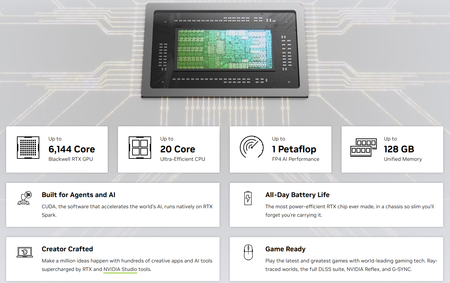
Alt headlines to A/B test: The Cloud-Bill Killer? RTX Spark Puts a Full Petaflop of AI on Your Lap Local AI Just Got Serious: 128 GB and a Petaflop, Unplugged Stop Renting GPUs. RTX Spark Brings Data-Center AI to Your Desk — and Your Bag For the last few years, doing real AI work meant one thing: renting someone else's hardware. Spin up an instance, watch the meter run, ship your data to a server you don't control, and hope the latency cooperates. RTX Spark is a bet that the next era looks different — that the most interesting AI will run where you are, on hardware you own. And the spec sheet backs up the ambition. The numbers that matter to builders Up to 1 petaflop of FP4 AI performance Up to 128 GB of unified memory Up to 6,144 cores of Blackwell RTX GPU Up to 20 cores of ultra-efficient CPU If you build with AI, two of these should stop your scroll. A full petaflop of FP4 is the kind of throughput that turns "let it run overnight" into "let it run over lunch." And 128 GB of unified memory is the unlock almost no portable machine offers: CPU and GPU share one giant pool, so you can hold large models and big context entirely in memory — no swapping, no artificial caps on the size of what you load. The workloads that used to demand a rack now fit in a bag. Why this is a big deal for AI work CUDA runs natively. The platform that accelerates the world's AI runs at full speed on RTX Spark — meaning the frameworks, libraries, and agentic stacks you already use just work. No exotic ports, no "supported soon." That changes the day-to-day in three concrete ways: Fewer cloud bills. Prototype, fine-tune, and run inference locally instead of burning credits every time you iterate. Your data stays yours. Sensitive datasets never leave the device — a quiet superpower for anyone working under compliance or NDA. Build agents anywhere. A genuinely portable petaflop means you can develop and test agentic workflows on a train, in a client's office, or off the grid entirely. For the wave of teams building agents and AI products right now, "local-first" stops being a compromise and starts being an advantage. A petaflop that doesn't need a power brick Here's the part that makes the rest believable: RTX Spark is built around the most power-efficient RTX chip ever made. That efficiency is why a petaflop can live in a slim chassis and last all day. Performance you can only use while tethered to a wall isn't really portable performance — and that's the trap RTX Spark is designed to avoid. When the work is done It's not all inference and fine-tuning. The same silicon makes RTX Spark a creator's machine — hundreds of creative apps and AI tools accelerated by RTX and NVIDIA Studio — and a genuine gaming rig after hours, with ray tracing, the full DLSS suite, NVIDIA Reflex, and G-SYNC. One device, three lives. The takeaway The story of AI has been a story of renting access to power. RTX Spark points at a different future: owning it, carrying it, and pointing it at whatever you're building — without the meter running. So here's the real question If you had a portable petaflop with 128 GB of unified memory, what's the first thing you'd run on it — a local LLM, an agent swarm, your own fine-tune? Drop it in the comments. I'm genuinely curious what this community would build first.saravananp3 months agoDay Hiker III180Views1like0CommentsArtificial Intelligence (AI) Sessions at Accelerate 2026
Accelerate 2026 is right around the corner! 🚀 Learn how to build a blueprint for AI competitive advantage with the Everpure platform. Hear from industry experts and customers about best practices to create your AI factory—from pilot to production. If this sounds right up your alley, we’ve curated a list of must-attend breakout sessions focused on all things AI. Check out these don’t miss sessions: The State of AI, 2026: Top Advances and Their Impact on Global Enterprises Come See What We've Been Building: A Guided Tour of Everpure's Enterprise AI Portfolio Data Stream: Zero Friction from Storage to AI How are NeoClouds, Enterprises and Commercial Customers Adopting AI at Scale with Everpure 🎤 Featured Speaker We are thrilled to have Par Botes sharing deep-dive insights into the State of AI in 2026. You won't want to miss this keynote! Will you be joining us in person? Drop a comment below with the session you're most interested in and what you hope to learn!catud3 months agoCommunity Manager376Views1like0CommentsAccelerate Breakout Replay: Feeding the Beast: Designing Storage Architectures to Optimize GPU Utilization
Explore how to build AI-ready storage with high-throughput, low-latency architectures to keep GPUs fed while eliminating I/O bottlenecks. Speakers: Kevin Parker Ed Hsu Mike Webb, Silicon Labs https://www.purestorage.com/video/webinars/designing-storage-architectures-to-optimize-gpu-utilization/6375343080112.htmlcatud1 year agoCommunity Manager95Views1like0Comments