FREE BEER FOR ALL!!! Now That I Have Your Attention, Let's Talk About Purity Updates.
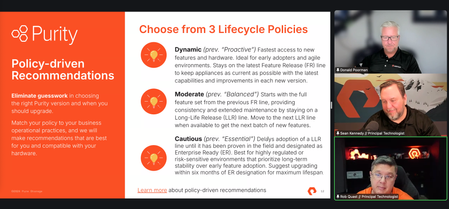
WAIT WAIT WAIT - don't leave yet because of my free beer tomfoolery....hear me out. Listen, we get it. Storage OS updates are historically the LAST thing you ever want to consider for your already impossibly thin maintenance windows. And, we all know NOBODY ever grew up saying, "When I get older, I want to manage enterprise storage for its rock and roll lifestyle." 😀 But - hear me out. Any past pain, suffering, or heavy drinking you may have taken on during previous OS updates with other legacy vendors has been minimized or even flat out eliminated by how we handle updating Purity for FlashArray and FlashBlade. We offer two tracks you can leverage for making them happen by either working directly with support for a white glove update experience where they do all the work remotely, or you can complete them via the Self Support Update (SSU) feature built into Pure1. We encourage regular Purity updates for two reasons: Performance. stability and security improvements...obviously New feature adoption. Want Fusion 2.0? Want the ability to deliver NFS/SMB shares on your FlashArray? These are bundled into your Purity updates and require no additional licensing costs to adopt if you want them. Think of them as over the air feature updates that are all the rage for EVs... For now, take a quick look at the Purity version you are running. If you haven't updated it in a year or two (which many of you probably haven't), you're missing out on being able to squeeze extra value out of your storage. I will be posting some supporting demos and other materials to help you visualize the process in the coming month or so. I would LOVE any feedback from the community, good or bad, on current or past experiences with our updating experience...through it all we can get more boats to rise with the tide! Stay tuned! DP498Views6likes1Comment
Fusion preset: VMFS datastore volumes for VMware ESXi clusters (with two-tier snapshots and QoS)
Hi all, I put together a Fusion preset for one of the most common block use cases in our environment: provisioning VMFS datastore volumes for a VMware ESXi cluster. What it does: - 4x 4 TiB datastore volumes on a FlashArray//X storage class (adjust count/size to your cluster design) - Two-tier snapshot retention: hourly snapshots kept for 1 day (fast rollback) plus daily snapshots kept for 30 days - Per-volume QoS limit (50k IOPS / 1 GiB/s) so a single datastore cannot starve the array - An "environment" parameter (prod/test/dev) that is requested at deployment time and written into the workload tags for filtering and chargeback The JSON follows the conventions of the official PureStorage-OpenConnect/fusion-presets repository, including the _comment documentation style. One honest note is included in the preset itself: array-side snapshots of VMFS datastores are crash-consistent, not VM-consistent, so treat them as an extra safety net next to your backup solution. GitHub link: https://github.com/knabespecht/pure_workflows/blob/main/presets/vmware-esxi-datastores.json Feedback welcome, especially on the QoS defaults and retention values you use for similar setups.389Views4likes1CommentAsk Us Everything about Purity Upgrades!
💬 We had an amazing Ask Us Everything, this past Friday, June 5th at 9 AM Pacific. It was all about Purity Upgrades. If you missed it or still have a burning question, don't fret! Feel free to ask it here and we'll get it answered for you by our experts! mbednar, greGPT plus kevinr were the moderators and experts who answered your questions during the conversation and will get to here on the community as well. If you want to catch the replay, check out the recording here!66Views3likes0CommentsAsk us everything about Purity Upgrades!
💬 Have more questions for our experts around Purity Upgrades after today's live "Ask Us Everything"? Feel free to drop them below and our experts will answer! dpoorman , skennedy , rquast , jhoughes tag your it! You can also check out these upgrade resources: Bulk self-service upgrades demo video Upgrade your own FlashArray with Pure1 blog Fleet-wide self-service upgrades brief762Views3likes3Comments
Ask Us Everything Recap: How Pure1 Makes Storage Feel… Easy
If you joined the latest Ask Us Everything session on Pure1, one theme came through clearly: storage management does not have to be complicated. This session, driven by questions from the Everpure Community, explored how Pure1 has grown from a monitoring tool into a self-service control plane with planning, assessments, workflow automation, and proactive support intelligence. Here are some of the highlights. “What is Pure1 actually doing for me?” Pure1 has always been rooted in the rich telemetry that Everpure collects from arrays. Today, it gives customers a single, global view of their environment, making it easier to understand fleet health, performance, support status, and risk. The key point from the experts was that Pure1 is not just showing data. It also helps you decide what to do next. Instead of logging into individual systems or stitching together reports, teams can use Pure1 as a central place to see what is healthy, what needs attention, and where action may be needed. And with AI Copilot, this and much more can even be done via natural language. “Can Pure1 really help with planning?” In traditional storage environments, planning often means spreadsheets, manual analysis, or bringing in outside help. Pure1 changes that by building planning tools directly into the management experience. Admins can model capacity growth, performance trends, hardware upgrades, and the impact of adding new workloads, all within the same plan. Even better, those models are interactive. You can test scenarios, compare options, and see likely outcomes before making changes. That is a major difference from legacy storage, where planning often feels like a separate project. With Pure1, planning becomes part of everyday operations. “What about security and data protection?” Attendees also asked about risk, resiliency, and readiness. Pure1 includes assessments that help teams understand where they stand. Security assessments look at areas such as password hygiene, vulnerabilities, and exposure. Data protection assessments focus on recovery readiness, replication, and SafeMode coverage. That distinction matters. Security is about reducing the chance of something bad happening. Data protection is about being ready when something does. Pure1 helps teams look at both sides, track improvement over time, and identify gaps before they become urgent problems. “How proactive is support, really?” This was one of the strongest examples of how Pure1 differs from traditional storage tools. Pure1 is tied directly into Everpure’s proactive support model. Instead of waiting for customers to find and report issues, Everpure can detect many problems early through telemetry and pattern recognition. That includes early signs of hardware issues, unusual performance behavior, or network conditions that may become problems later. The big takeaway: Pure1 helps spot trouble before it affects performance or availability. The majority of support cases are opened automatically, and customers can track case status and related alerts directly in Pure1. For storage teams, that means fewer surprises and less time spent proving that a problem exists. “Can I customize this for my environment?” Yes, and this is where Pure1 starts to feel less like a dashboard and more like an operations platform. The session touched on workflow orchestration and alerting, including the ability to create custom alerts, route notifications to tools like email or Slack, and build simple response workflows. And AI Copilot further simplifies the customization process. That flexibility is important because every environment is different. Pure1 provides built-in intelligence, but also gives teams ways to adapt it to their own operational processes. “What about file and object data?” Attendees asked whether those capabilities would be visible in their current Pure1 experience. The answer was yes. Pure1 provides visibility across protocols, including block, file, and object, without requiring separate tools. That consistency reflects Everpure’s broader design goal: add capability without adding complexity. Final thoughts The biggest takeaway from the session was simple: Pure1 turns storage management into a self-service experience. Instead of: Reacting to problems Relying on external analysis Managing systems one by one You’re able to: Plan proactively Assess continuously Automate intelligently, across your data estate For technical practitioners, that means less time in spreadsheets, fewer manual checks, and more confidence managing storage at scale. And based on the questions from the community, that is exactly the kind of simplicity storage teams are looking for. Find out more about how Pure1 enables the Everpure Intelligent Control Plane here. Check out this and all our other Ask Us Everything sessions. And, keep the conversation going by jumping into the Everpure Community.229Views2likes0CommentsPure1 Feature Request: Assets > Genealogy milestones overlaid on Analytics > Performance graphs
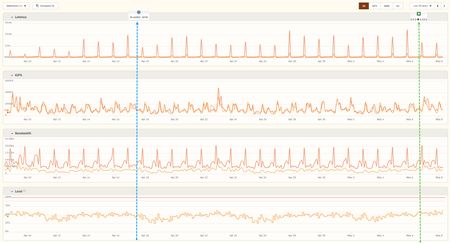
It would be helpful in analyzing and correlating array performance profile changes if genealogy events for an array (either controller replacement via Evergreen NDU or even PurityOE upgrades vis SSU) could be overlaid on the Analytics > Performance graph data for the array and time period selected. I attached a crude mockup of the idea, but I'm sure it could be done much more elegantly and less visually intrusively with a small floating tick mark with a hover effect showing the genealogy change to the array. It could get complicated when graphing performance data for multiple arrays, but could be handled in the same way it is for the performance graphing with a different color per array. Or instead of overlaying the genealogy data as default, perhaps add a "Display Genealogy" checkbox option to the performance graphs. And I'll use this opportunity to once again beat the drums for extending the data retention in Pure1 to >30 days to help identify longer performance trends, which are sometimes not easily visible in a max 30-day performance data windows.391Views2likes1CommentThe SafeMode Seance: A Cyber Security Haunting
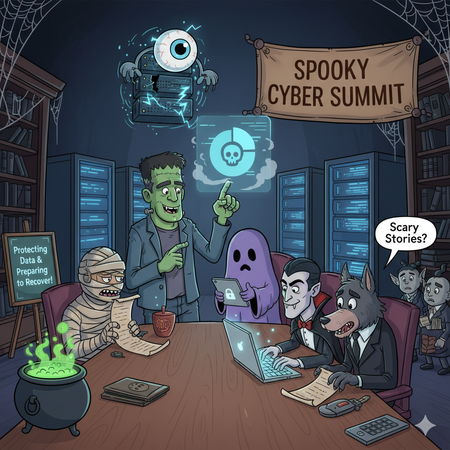
Topic: How are you protecting your data from cyber threats? Are you both protecting your data, while also preparing to recover in the event that your organization is impacted by a cyber event? Join us for a spooky, cyber-focused meeting; a supportive and open forum where we’ll share scary stories, and explore solutions to ensure your data is protected from even the most ghoulish threats. This customer-driven discussion will focus on your experiences and challenges with protecting your data from a cyber attack. Pure Storage experts will offer insights and guidance to help you protect your data from the zombie apocalypse. Get Involved: We're looking for security-focused individuals who would be willing to attend and share their perspective on how they are helping their organization protect against cyber threats, and prepare in the case that recovery is needed. And all are welcome. You don't have to be a Pure Storage customer to attend. Join the community, talk to your peers, and have some fun. Agenda: Welcome, Introductions, Updates Customer Presentation - How to use Pure1 Assessments to review and improve your security posture Customer Presentation - Something strange is happening, but we don't know what it is. How I used Pure1 AI CoPilot along with Varonis to narrow the scope on the "strange stuff" Pure Presentation (w/ alliance partners) - SafeMode, Cyber Resiliency and Isolated Recovery Environments Panel/Q&A - Open discussion amongst the community; w/ security-focused individuals (hopefully) in attendance. Anonymous Group Feedback: Share your thoughts and experiences in regards to data protection. What’s working? What’s not? Where could you use some feedback from the community? Understanding Your Needs: What does your organization need to fully protect your data, and recover if you were ever attacked? We’ll help you pinpoint what truly matters. Exploration Circle: Hear from Pure’s subject matter experts on what they are seeing regarding the latest cyber security and cyber resiliency topics. Support & Resources: Find out where you can get additional help, training, and resources. Date: Wednesday, October 15th, 2-4pm ET. Location: Aces Pickleball, 2730 Maverick Dr, Norwood, OH 45212 (Factory 52) RSVP: https://info.purestorage.com/2025-Q3AMS-COMREPLCRCincinnatiPUGLP_01---Registration-Page.html Stick around after the Pure User Group meeting and enjoy Pies & Pints with Pure Storage, our partners, and fellow customers.397Views2likes1Comment
Feature Request for Puritan Heroes — Manage snapshot schedules directly in Pure1
An opportunity to shine Summary / problem Today, snapshot scheduling and edits are performed per-array (e.g., via Purity protection policies / groups). At fleet scale this is manual, slow for change control, and hard to audit centrally. We’d like first-class, Pure1-native capabilities to create, modify, and bulk-apply snapshot schedules—without logging into each array. Impact / why this matters Fleet operations: one place to set/adjust RPO/retention across many FlashArrays/FlashBlades. Change management & compliance: audited, role-scoped changes with approver workflow. Risk & capacity: pre-change impact analysis (capacity, performance) using Pure1 telemetry. Consistency: policy templates and guardrails reduce configuration drift. Scope (initial ask) Pure1 UI “Snapshot Policies” workspace to create/edit/delete schedules and retentions (minute/hour/day/week/month), including SafeMode/immutability options where supported. Bulk Apply/Override to multiple arrays, volume groups, file systems/shares. What-if capacity forecast prior to save (based on Pure1 analytics). Change review & approvals (optional), with rationale and ticket ID fields. Maintenance/blackout windows and exceptions. Full audit trail (who, what changed, before/after, when, target objects). RBAC: granular rights (view vs. edit vs. approve), and per-array or per-group scoping. Pure1 Public API New endpoints to programmatically create/read/update/delete snapshot policies, bind/unbind them to objects, run an on-demand snapshot from a policy, and pull audit events—so we can integrate with CI/CD and ITSM. (We rely on Pure1 API today for telemetry; adding write ops for policies would unlock safe automation.) Edge / connectivity Use Pure1 Edge Service for secure, two-way execution on arrays. Include graceful handling for dark/offline assets (queue and notify). Acceptance criteria (examples) From Pure1, I can create a policy “gold-daily-35d” and attach it to 100+ arrays / 1,000+ objects in a single operation. A non-admin can propose a policy change; an approver must OK it before it takes effect. Audit page shows a human-readable diff (before/after crontab-style schedule and retention) plus API payloads. Capacity impact estimator shows expected snapshot object growth over 30/90 days based on historical change rates. API: POST /snapshot-policies, PATCH /snapshot-policies/{id}, POST /snapshot-policy-attachments, GET /audit-events?type=snapshot_policy. Nice-to-haves Prebuilt policy templates (e.g., 15-min RPO for 24h + daily 35d + monthly 12m). Guardrails (“warn/deny if estimated growth > X TB or RPO < Y min”). Service-now/Jira webhook on approval/change. Environment Mixed FA/FB fleet; Pure1 connected, Edge Service available. SafeMode enabled on arrays requiring immutability. Thanks in advance - Garry Ohanian366Views2likes1Comment