VM Analytics for Xen
Hi, we have recently brought Citrix Xenserver into our environment and have purchased an X20 for the storage component for this. We have an X50 for our VMware environment and physical servers needing drives assigned (as well as leveraging File on that array). Do love the VM analytics that Pure1 provides in from our VMware environment. Just wondering if other Hypervisors (such as Xen) are on the roadmap to also get this feature available in Pure1?Solved286Views0likes2CommentsFusion preset: VMFS datastore volumes for VMware ESXi clusters (with two-tier snapshots and QoS)
Hi all, I put together a Fusion preset for one of the most common block use cases in our environment: provisioning VMFS datastore volumes for a VMware ESXi cluster. What it does: - 4x 4 TiB datastore volumes on a FlashArray//X storage class (adjust count/size to your cluster design) - Two-tier snapshot retention: hourly snapshots kept for 1 day (fast rollback) plus daily snapshots kept for 30 days - Per-volume QoS limit (50k IOPS / 1 GiB/s) so a single datastore cannot starve the array - An "environment" parameter (prod/test/dev) that is requested at deployment time and written into the workload tags for filtering and chargeback The JSON follows the conventions of the official PureStorage-OpenConnect/fusion-presets repository, including the _comment documentation style. One honest note is included in the preset itself: array-side snapshots of VMFS datastores are crash-consistent, not VM-consistent, so treat them as an extra safety net next to your backup solution. GitHub link: https://github.com/knabespecht/pure_workflows/blob/main/presets/vmware-esxi-datastores.json Feedback welcome, especially on the QoS defaults and retention values you use for similar setups.389Views4likes1CommentAsk Us Everything about Purity Upgrades!
💬 We had an amazing Ask Us Everything, this past Friday, June 5th at 9 AM Pacific. It was all about Purity Upgrades. If you missed it or still have a burning question, don't fret! Feel free to ask it here and we'll get it answered for you by our experts! mbednar, greGPT plus kevinr were the moderators and experts who answered your questions during the conversation and will get to here on the community as well. If you want to catch the replay, check out the recording here!66Views3likes0Comments
Ask Us Everything Recap: How Pure1 Makes Storage Feel… Easy
If you joined the latest Ask Us Everything session on Pure1, one theme came through clearly: storage management does not have to be complicated. This session, driven by questions from the Everpure Community, explored how Pure1 has grown from a monitoring tool into a self-service control plane with planning, assessments, workflow automation, and proactive support intelligence. Here are some of the highlights. “What is Pure1 actually doing for me?” Pure1 has always been rooted in the rich telemetry that Everpure collects from arrays. Today, it gives customers a single, global view of their environment, making it easier to understand fleet health, performance, support status, and risk. The key point from the experts was that Pure1 is not just showing data. It also helps you decide what to do next. Instead of logging into individual systems or stitching together reports, teams can use Pure1 as a central place to see what is healthy, what needs attention, and where action may be needed. And with AI Copilot, this and much more can even be done via natural language. “Can Pure1 really help with planning?” In traditional storage environments, planning often means spreadsheets, manual analysis, or bringing in outside help. Pure1 changes that by building planning tools directly into the management experience. Admins can model capacity growth, performance trends, hardware upgrades, and the impact of adding new workloads, all within the same plan. Even better, those models are interactive. You can test scenarios, compare options, and see likely outcomes before making changes. That is a major difference from legacy storage, where planning often feels like a separate project. With Pure1, planning becomes part of everyday operations. “What about security and data protection?” Attendees also asked about risk, resiliency, and readiness. Pure1 includes assessments that help teams understand where they stand. Security assessments look at areas such as password hygiene, vulnerabilities, and exposure. Data protection assessments focus on recovery readiness, replication, and SafeMode coverage. That distinction matters. Security is about reducing the chance of something bad happening. Data protection is about being ready when something does. Pure1 helps teams look at both sides, track improvement over time, and identify gaps before they become urgent problems. “How proactive is support, really?” This was one of the strongest examples of how Pure1 differs from traditional storage tools. Pure1 is tied directly into Everpure’s proactive support model. Instead of waiting for customers to find and report issues, Everpure can detect many problems early through telemetry and pattern recognition. That includes early signs of hardware issues, unusual performance behavior, or network conditions that may become problems later. The big takeaway: Pure1 helps spot trouble before it affects performance or availability. The majority of support cases are opened automatically, and customers can track case status and related alerts directly in Pure1. For storage teams, that means fewer surprises and less time spent proving that a problem exists. “Can I customize this for my environment?” Yes, and this is where Pure1 starts to feel less like a dashboard and more like an operations platform. The session touched on workflow orchestration and alerting, including the ability to create custom alerts, route notifications to tools like email or Slack, and build simple response workflows. And AI Copilot further simplifies the customization process. That flexibility is important because every environment is different. Pure1 provides built-in intelligence, but also gives teams ways to adapt it to their own operational processes. “What about file and object data?” Attendees asked whether those capabilities would be visible in their current Pure1 experience. The answer was yes. Pure1 provides visibility across protocols, including block, file, and object, without requiring separate tools. That consistency reflects Everpure’s broader design goal: add capability without adding complexity. Final thoughts The biggest takeaway from the session was simple: Pure1 turns storage management into a self-service experience. Instead of: Reacting to problems Relying on external analysis Managing systems one by one You’re able to: Plan proactively Assess continuously Automate intelligently, across your data estate For technical practitioners, that means less time in spreadsheets, fewer manual checks, and more confidence managing storage at scale. And based on the questions from the community, that is exactly the kind of simplicity storage teams are looking for. Find out more about how Pure1 enables the Everpure Intelligent Control Plane here. Check out this and all our other Ask Us Everything sessions. And, keep the conversation going by jumping into the Everpure Community.229Views2likes0CommentsPure1 Feature Request: Assets > Genealogy milestones overlaid on Analytics > Performance graphs
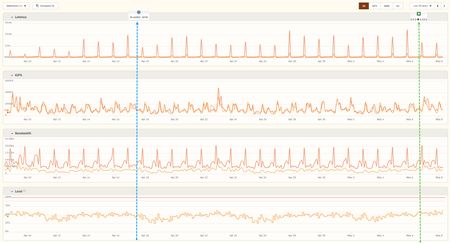
It would be helpful in analyzing and correlating array performance profile changes if genealogy events for an array (either controller replacement via Evergreen NDU or even PurityOE upgrades vis SSU) could be overlaid on the Analytics > Performance graph data for the array and time period selected. I attached a crude mockup of the idea, but I'm sure it could be done much more elegantly and less visually intrusively with a small floating tick mark with a hover effect showing the genealogy change to the array. It could get complicated when graphing performance data for multiple arrays, but could be handled in the same way it is for the performance graphing with a different color per array. Or instead of overlaying the genealogy data as default, perhaps add a "Display Genealogy" checkbox option to the performance graphs. And I'll use this opportunity to once again beat the drums for extending the data retention in Pure1 to >30 days to help identify longer performance trends, which are sometimes not easily visible in a max 30-day performance data windows.391Views2likes1Comment