Pure Storage Cloud for Azure VMware Solution | Public Preview Announcement
Pure Storage Cloud for Azure VMware Solution has officially entered a Public Preview phase! Check out the launch blog posts: Pure Storage Cloud for Azure VMware Solution: A Closer Look Announcing the Public Preview of Azure Native Pure Storage Cloud for Azure VMware Solution | Microsoft Community Hub142Views4likes0Comments
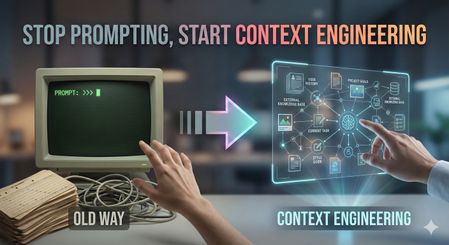
Stop Prompting, Start Context Engineering
This blog post argues that Context Engineering is the critical new discipline for building autonomous, goal-driven AI agents. Since Large Language Models (LLMs) are stateless and forget information outside their immediate context window, Context Engineering focuses on assembling and managing the necessary information—such as session history, long-term memory (embeddings, RAG indexes), and tool outputs—for the agent every single turn. The post asserts that storage, not the LLM or the prompt, is the primary performance bottleneck for AI at scale. The speed of the underlying storage architecture dictates the agent's responsiveness because it must quickly retrieve and persist context data repeatedly.225Views3likes0CommentsPure Cloud Block Store is now Pure Storage Cloud Dedicated (PSC Dedicated)
Pure Storage Cloud Dedicated: Name Change, Same Enterprise-Grade Experience Pure Storage Cloud is an enterprise-grade block storage delivered as a service in the public cloud. It extends the data services and evergreen architecture of the Purity operating system and can be deployed in: Azure as a fully managed native service or a customer-managed service integrated with Azure VMware Solution (AVS) AWS as a customer-managed service integrated with Elastic VMware Service (EVS) What’s New? Pure Cloud Block Store, the customer-managed service, is being renamed Pure Storage Cloud Dedicated (PSC Dedicated). This change reflects its integration into the Pure Storage Cloud family and alignment with the Enterprise Data Cloud strategy. What’s Not Changing? Everything That Matters Your experience, performance, and features remain the same. Pure Storage Cloud Dedicated continues to provide: Enterprise Data Services: Purity software in Azure and AWS, with data reduction, thin provisioning, and snapshots. Cost Efficiency: Optimized storage usage and reduced footprint through data reduction. Reliability & Resilience: Built-in redundancy, high availability, and cyber resilience. Hybrid & Multi-Cloud Mobility: Consistent APIs and replication across FlashArrays and PSC Dedicated for migration, DR, and data mobility. Disaster Recovery & Backup: Asynchronous and near-synchronous replication, plus snapshots for cost-effective backup and rapid recovery. VMware Workload Support: Enterprise-grade storage for VMware in AVS and EVS environments. Why This Matters The shift from Pure Cloud Block Store to Pure Storage Cloud Dedicated unifies offerings under the Pure Storage Cloud umbrella while advancing the broader Enterprise Data Cloud strategy.520Views3likes0CommentsHealthcare Sessions at Accelerate 2026
Accelerate is almost here! 🙌 Check out our special track tailored for healthcare professionals. Hear from Everpure experts about the latest trends and strategies for data management success in healthcare. If this sounds right up your alley, we’ve curated a list of must-attend breakout sessions focused on all things Healthcare. Check out these don't miss sessions: Modernizing Epic Infrastructure: Performance, Flexibility, Resilience, and Virtualization Evolving Everpure Cloud Value: A Smarter Hybrid Cloud Approach for Healthcare Predictable Imaging Economics: Powering End-to-End Solutions with Price-per-Study Edge AI in Production: Real-Time Decision-Making in Sanofi’s Cryo-EM Core Will you be joining us in person? Drop a comment below with the session you're most interested in and what you hope to learn!345Views2likes0CommentsJoin Everpure Cloud at Pure Accelerate 2026
If you're coming to Pure Accelerate, make time for the Everpure™ Cloud sessions. This year's lineup brings together breakout sessions, flash talks, and a community meetup focused on modern cloud storage across Azure and AWS, workload design, hybrid cloud strategy, and practical ways to improve cost efficiency and operational simplicity. Whether you're evaluating how to support Azure VMs at scale, looking for better patterns for hybrid workloads, or trying to bring more predictability to cloud storage costs, these sessions are designed to help you move from strategy to execution. Why attend the Everpure Cloud sessions? Cloud teams are under pressure to do more than just migrate. They need to control costs, simplify operations, and build architectures that can adapt as business needs change. At Pure Accelerate, the Everpure Cloud sessions will focus on exactly those conversations, with content spanning architecture, scale, FinOps, storage operations, and real-world workload guidance. This is a strong opportunity to hear how Everpure Cloud supports modern cloud environments across Azure, AWS, and hybrid use cases, while giving infrastructure teams more flexibility in how they scale and manage storage. Featured Everpure Cloud sessions at Pure Accelerate Breakout sessions Modern Azure Storage with Everpure Cloud: Architecture, Scale & FinOps — Thursday, June 18, 1:45–2:30 PM PT. Configuring Workloads for Everpure Cloud: Architectures, Patterns, and Gotchas — Thursday, June 18, 1:45–2:30 PM PT. Maximizing Hybrid SQL Server 2025 on Azure with Everpure Cloud — Wednesday, June 17, 2:45–3:30 PM PT. These breakout sessions are ideal for attendees who want a deeper look at architecture decisions, workload best practices, and ways to align cloud storage performance with cost and scale requirements. Flash talks Everpure Cloud Azure Native for Azure VMs in 15 Minutes — Thursday, June 18, 2:45–3:05 PM PT. Accelerating Storage Operations with Everpure Cloud — Thursday, June 18, 3:15–3:35 PM PT. Evolving Everpure Cloud Value: A Smarter Hybrid Cloud Approach for Healthcare— Thursday, June 18, 12:30–12:50 PM PT. Public Cloud Experience, Private Cloud Economics— Thursday, June 18, 12:00–12:20 PM PT. If you want high-value takeaways in a shorter format, these flash talks are a great way to quickly explore how Everpure Cloud can help streamline operations, support Azure VM environments, and improve the economics of cloud storage. Community session Community Meetup: You're Moving to the Cloud: Now What? — Wednesday, June 17, 5:30–6:30 PM PT. This meetup is a great fit for anyone looking to exchange ideas with peers, hear different perspectives on cloud adoption, and join a broader conversation around the challenges and opportunities that come with moving to the cloud. Meet the Everpure cloud team at booth If you're in Las Vegas for Pure Accelerate, stop by the Everpure Cloud showcase booth to continue the conversation in person and to learn how organizations are reducing storage costs, simplifying operations, and scaling hybrid cloud environments more efficiently. Learn more To explore the Everpure Cloud portfolio in more detail, visit the Everpure Cloud webpage. For deeper technical guidance, check out these Knowledge Portal resources: Everpure Cloud Dedicated for Azure documentation Everpure Cloud Dedicated for AWS documentation Everpure Cloud Azure Native documentation Add Everpure Cloud to Your Pure Accelerate Agenda If cloud cost optimization, operational simplicity, and scalable storage architectures are priorities for your team, be sure to add these sessions to your Pure Accelerate schedule. We look forward to seeing you there. Ready to join us in Las Vegas? Register now for Pure Accelerate 2026 and start building your agenda. We look forward to seeing you there.381Views2likes0Comments
Ask Us Everything: Everpure & Databases - From Firefighting to Forward Thinking
Databases aren’t going anywhere—in fact, they’re becoming more important than ever. In this Ask Us Everything session, Don Poorman sat down with Everpure database experts Anthony Nocentino and Ryan Arsenault to talk all things structured data. And while AI continues to dominate headlines, one theme came through clearly: AI doesn’t replace databases—it depends on them. If you’re running Oracle, SQL Server, SAP, or anything mission-critical, here’s what stood out.109Views2likes0Comments
Pure's Intelligent Control Plane: Powered by AI Copilot, MCP Connectivity and Workflow Orchestration
At Accelerate 2025, we announced two capabilities that change how you manage Pure Storage in your broader infrastructure: AI Copilot with Model Context Protocol (MCP) and Workflow Orchestration with production-ready templates. Here's what they do and why they matter. AI Copilot with MCP: Your Infrastructure, One Conversation The Problem Your infrastructure spans multiple platforms. Pure Storage managing your data, VMware running VMs, OpenShift handling containers, security tools monitoring threats, application platforms tracking performance - each with its own console, APIs, and workflows. When you need to migrate a VM or respond to a security incident, you're manually pulling information from each system, correlating it yourself, then executing actions across platforms. You become the integration layer. The Solution Pure1 now supports Model Context Protocol (MCP), taking Copilot from a suggestive assistant to an active operator. With MCP enabled, Copilot doesn’t just recommend - it acts. It serves as a secure bridge between natural language and your infrastructure, capable of fetching data, executing APIs, and orchestrating workflows across diverse systems. Here’s what makes this powerful: You deploy MCP servers within your environment—one for VMware, another for OpenShift, and others for the systems you use. Each server exposes your environment’s capabilities through a standard, interoperable protocol. Pure Storage AI Copilot connects seamlessly to these MCP servers, as well as to Pure services such as Data Intelligence, Workflow Orchestration, and Portworx Monitoring, enabling unified and secure automation across your hybrid ecosystem. What You Can Connect You can deploy an MCP server on any system whether it’s your VMware environment, Kubernetes clusters, security platforms like CrowdStrike, databases, monitoring tools, or custom applications. Pure Storage AI Copilot connects to these servers under your control, securely combining their data with Pure Storage services to deliver richer insights and automation. Getting Started: If you have a use-case around MCP, please contact your Pure Storage account team. Workflow Orchestration: Deploy in Minutes, Not Months The Problem Building production-grade automation takes months. You need error handling, integration with multiple systems, testing for edge cases, documentation, ongoing maintenance. Most teams end up with half-finished scripts that only one person understands. The Solution We built workflow templates for common operations, tested them at scale, and made them available in Pure1. Install them, customize to your needs, and run them in minutes. Key Templates VMware to OpenShift Migration with Portworx Handles complete migration: extracts VM metadata, identifies backing Pure volumes, checks OpenShift capacity, configures vVols Datastore and DirectAccess, uses array-based replication, converts to Portworx format. Traditional migration takes hours for TB-scale VMs. This takes 20 to 30 minutes. SQL / Oracle Database Clone and Copy Automates cloning and copying of SQL Server and Oracle databases for dev/test or refresh needs. Instantly creates storage-efficient clones from snapshots, mounts them to target environments, and applies Pure-optimized settings. The hours-long manual process becomes a quick, consistent workflow completed in minutes Daily Fleet Health Check Scans all arrays for capacity trends, performance issues, protection gaps, hardware health.Posts summary to Slack. Proactive visibility without manually checking each array. Rubrik Threat Detection Response When Rubrik detects a threat, automatically tags affected Pure volumes, creates isolated immutable snapshots, and notifies the security team. Security events propagate to your storage layer automatically. How It Works Workflow Orchestration is a SaaS feature in Pure1. Deploy lightweight agents (Windows, Linux, or Docker) in your data center to execute workflows locally. Group agents together for high availability and governance controls. Integrations Native Pure Storage: Pure1 Connector for full API access, Fusion Connector for storage provisioning (works for Fusion and non-Fusion FlashArray/FlashBlade customers) Third-Party: ServiceNow, Slack, Google, Microsoft,CrowdStrike, HTTP/Webhooks, Pagerduty, Salesforce and more. The connector library continues expanding. Getting Started: Opt-in now in Pure1 - Workflow. Introductory offer available at this time. Check with your Pure account team if you have questions. How They Work Together At Accelerate 2025 in New York, we showcased this capability in action. Here's the scenario: an organization wants to migrate VMs to Kubernetes. Action-enabled Copilot orchestrates communication with Pure Storage appliances and services as well as third-party MCP servers to collect the required information for addressing a problem across a heterogeneous environment. With Pure1 MCP, AI Copilot, and Workflows, there's now a programmatic way to collect information from OpenShift MCP, VMware MCP, and Pure1 storage insights- then recommend an approach on what VMs to migrate based on your selection criteria. You prompt Copilot: "How can I move my VMs to OpenShift in an efficient way?" Copilot communicates across: Your VMware MCP server - to get VM specifications, current configurations, resource usage Your OpenShift MCP server - to check available cluster capacity, validate compatibility Portworx monitoring - to understand current storage performance Copilot reasons across all this information, identifies ideal VM candidates based on your criteria, and recommends the migration approach- which VMs to move, target configurations, and how to preserve policies. Then it can trigger the migration workflow, keeping you updated throughout the process. Why This Matters Storage Admins: Stop being the bottleneck. Enable self-service while maintaining governance. DevOps Teams: Deploy production-tested automation without writing code. Security Teams: Build automated response workflows spanning detection, isolation, and recovery. Infrastructure Leaders: Reduce operational overhead. Teams focus on strategy, not repetitive tasks. Get Started MCP Integration:If you have a use-case around MCP, please contact your Pure Storage account team.. Workflow Orchestration:Opt-in at Pure1 → Workflows. Learn More: Documentation in Pure1 or contact your Pure Storage account team. Pure1 evolved from a monitoring platform to an Intelligent Control Plane. AI Copilot reasons across your infrastructure. Workflow Orchestration executes. Together, they change how you manage data with Pure Storage.1.1KViews2likes0Comments
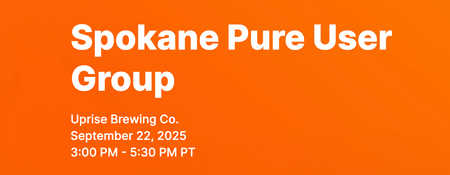
The Spokane Pure User Group is coming Sept. 22nd
Join us for a dynamic Pure Storage Customer Event on September 22 at Uprise Brewing Co! This exclusive gathering brings together Pure Storage experts, featured speakers, and fellow customers for an afternoon packed with learning, networking, and fun. Explore our featured talk tracks: Accelerate Updates: Get an inside look at the latest enhancements to Pure Accelerate. Our experts will share what’s new, showcase the most impactful features, and provide guidance on how to take advantage of these updates to drive innovation and boost operational efficiency within your organization. Virtualization & Cloud: Dive deep into best practices for optimizing your virtualization stacks and seamlessly integrating Pure Storage with today’s cloud environments. Learn strategies for simplifying management, ensuring data protection, and enabling flexible, high-performance hybrid cloud solutions. Space is limited, so mark your calendar for September 22, 3:00 PM – 5:30 PM, and get ready for an engaging, informative event you won't want to miss. We look forward to seeing you at Uprise Brewing Co. Register Now!118Views2likes0CommentsUse CBS as persistent storage on AKS via Portworx CSI driver
Hi all, with the recent version of Portworx CSI driver (v25.4.0) you can mount a persistent block volume on CBS into your containers on Kubernetes and utilize all features and benefits of CBS. Sharing my recent blog post, how to set it up on Azure Kubernetes Service (AKS): https://blog.vjirovsky.cz/portworx-csi-with-aks-with-cbs/125Views2likes0CommentsMarch 2025 | Cloud Block Store Updates!
What’s new in Pure Cloud Block Store CBS 6.8.4 released This version is bringing multiple Purity OS improvements shared across on-premise FlashArray and Pure Cloud Block Store. For more details, please refer to Purity Release Notes. Tip of the Month For CBS documentation requests, you can use a new workflow available directly from this Slack channel. Just click Workflows on top of the window - select Cloud Documentation Request - fill out the form, and we’ll take care of the rest. Blogs Pure Cloud Block Store with Cirrus Migrate Cloud, part 1 - read here Pure Cloud Block Store with Cirrus Migrate Cloud, part 2 - read here Podcasts Purely Cloud episode 4 - Living with Pure Cloud Block Store - listen here Purely Cloud episode 5 - Bridging Worlds with Azure VMware Solution - listen here153Views2likes0Comments